
Dynamics are an important part of playing drums.
There are two basic ways to use dynamics in your playing; short dynamics that apply to a specific note, or long dynamics which apply to a series or group of notes across time.
“Short” dynamics
A loud note played within a group of notes is called an accent. In drum notation an accent is symbolised by the > sign.
An accent applies only to the note that the > sign appears above.

“Long” dynamics
A gradual increase in volume over a period of time (e.g. one bar) is called a crescendo or ‘build-up’.

Internal Dynamics
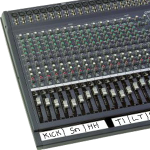 Think of your role not just as a drummer. You are a mixing desk! Your arms and legs are the faders – they control the volume level for each part being played in your drum grooves.
The inter-play between the limbs is called ‘internal dynamics’. Don’t confuse this with the overall dynamic level of the groove you’re playing. You can have internal dynamics whilst playing at an overall quiet volume or playing loudly. Internal dynamics are what give a groove momentum, feel and texture.
Using dynamics in your playing
The next time you learn a new groove pay particular attention to playing it in a number of different dynamic interpretations.
For example; you can alter the accent patterns (make notes louder and quieter to create new rhythmic patterns), or you could play with the internal dynamics of the constituent parts of the groove. Observe how dynamics and ‘mixing’ your own sound can really alter the overall feel of a groove.