
There are plenty of films about musicians, but drummers make particularly good subjects.
That’s partly because the instrument is so physical. Seeing a drummer play tells you things that the recording alone can’t: how they move around the kit, how hard or lightly they play, what they do between notes, how they react to the other musicians and how different two players can look while producing equally convincing results.
The best drumming films and documentaries can be more than just entertainment. They give you a close-up view of how different drummers think, play and develop their own musical identity.
That doesn’t mean treating everything you see on screen as a drumming lesson. There’s an important difference between documentary footage of a real performance and a fictional film constructed for the camera.
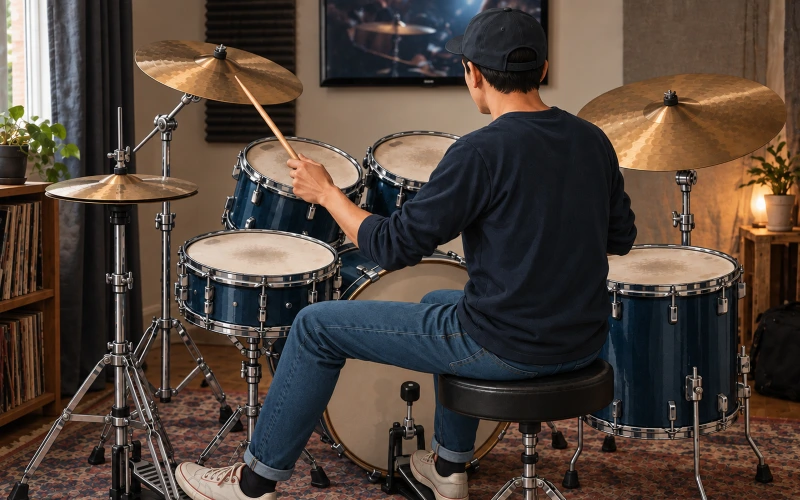
It may seem too obvious to say it, but real drumming and movie drumming aren't the same thing...
In a documentary or concert film, archive footage can show a drummer genuinely responding to a band in the moment. You’re watching the choices, movements and interactions that produced the music.
Filmmaking can also involve drum coaching, choreography, carefully chosen camera angles, editing, pre-recorded audio and, where needed, a drummer doubling for particular shots. What looks like one continuous performance on screen may have been assembled from numerous takes.
We’ve seen the other side of that process ourselves. Elephant Drums tutors have previously worked on various projects from films to TV productions and adverts, including coaching non-drummer actors to look convincing behind a kit for the camera.
So fictional drumming can still be interesting - sometimes extremely convincing - but it helps to distinguish what the film is showing you from what the story is asking you to believe.
With that in mind, here are six drumming films and documentaries worth watching, and what can be learnt from them.
Count Me In - why people become drummers
Count Me In is probably the easiest place to start if you just enjoy drums.
Rather than following one musician, the documentary brings together a wide range of rock drummers including Stewart Copeland, Chad Smith, Cindy Blackman Santana, Roger Taylor and Nick Mason. They talk about their own beginnings, the players who influenced them and their relationship with the instrument.
For a learner, one of the useful things to notice is just how different those influences are.
Drummers rarely develop in isolation. One player hears Ringo Starr, another Keith Moon, while somebody else comes through jazz, punk, funk or heavier music. Eventually those influences get mixed together with the player’s own personality.
That’s worth remembering when you’re learning somebody else’s drum part. Copying a groove accurately can be useful, but the longer-term aim isn’t to become a replica of the person who originally played it.
Listen, borrow, experiment and gradually work out what sounds like you.
Neil Peart: No One's Disciple - playing someone else's parts
Neil Peart’s playing with Rush inspired generations of drummers, but Neil Peart: No One’s Disciple offers an unusual way of looking at that influence.
The documentary brings Geddy Lee and Alex Lifeson together with Stewart Copeland, Danny Carey, Chad Smith and Gavin Harrison for a tribute to Peart and his musical legacy.
That creates an interesting question for anybody learning drums: what happens when an accomplished player approaches music that’s strongly associated with somebody else?
You can reproduce the notes, but you can’t entirely reproduce the drummer.
Touch, timing, movement, dynamics and musical instinct all affect the result. Even world-class drummers bring something of themselves to another player’s material.
For learners, that’s a useful way to think about the idea of a single “correct” performance. Accuracy matters, particularly while you’re learning a part, but music still leaves room for interpretation.
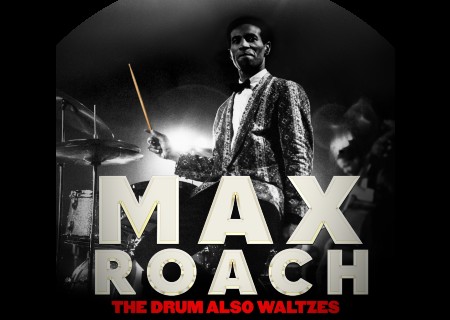
Max Roach: The Drum Also Waltzes - the drums as a musical voice
Max Roach: The Drum Also Waltzes follows the life and work of one of the great innovators of modern jazz drumming.
Roach wasn’t simply somebody providing time behind other musicians. He was a composer, bandleader and percussionist whose long career stretched from the development of bebop through politically engaged work during the Civil Rights era and into experimental percussion projects.
For a drummer, that widens the question from “what beat should I play?” to “what can the drums contribute to this piece of music?”
Listen to how a great drummer shapes phrases, leaves space and uses sound and rhythm as part of the composition.
That becomes increasingly important as your playing develops. Beginners quite reasonably concentrate on keeping the groove going. Later, you’re making more choices: whether to play at all, what to emphasise, how to respond to another musician and how much space the music needs.
A good drummer doesn’t just occupy the drum part. They help shape the music.
Phil Collins: Drummer First - your sound matters too
Phil Collins is so well known as a singer and songwriter that it’s easy to forget how much of his musical identity developed behind a drum kit.
Phil Collins: Drummer First deliberately tells his story from that perspective, covering his development as a drummer through Genesis, Brand X, his solo career, big band projects and his later years.
It’s particularly useful for thinking about drum sound.
Concert toms, drum machines, electronic Simmons drums and the famous gated-reverb sound associated with In the Air Tonight all form part of the story.
For a learner, it’s a reminder that drumming isn’t solely about which notes you play.
Where you strike the drum matters. Tuning matters. Dynamics matter. Cymbal choice matters. The room matters. Recording and production can change things again.
Two drummers can play exactly the same groove and sound completely different.
Technique gives you control over the instrument. Developing a sound is part of working out what you want to do with that control.
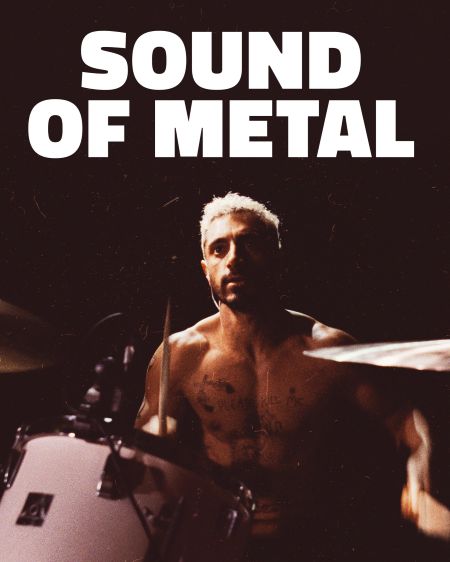
Sound of Metal - when drumming is part of your identity
Sound of Metal is fiction, but its drumming deserves a little more attention than simply calling it movie choreography.
Riz Ahmed plays Ruben, a touring drummer whose hearing suddenly deteriorates. Ahmed wasn’t a drummer when he took the role. He spent around seven months learning to play because director Darius Marder wanted the on-screen performances to be real.
That means when you see Ahmed playing in the film, he really is behind the kit playing.
The bigger story is about much more than drumming, but for musicians it raises an important subject: listening.
The film also explores something less tangible: what happens when playing music becomes part of how somebody understands themselves.
Most people learning drums aren’t building their entire identity around the instrument, and they don’t need to. But anybody who’s played for long enough will recognise that drumming can become more than an activity you happen to do.
It becomes part of how you listen to music.
Whiplash - a great drumming film, but not a teaching manual
It’d be difficult to write about drumming films without including Whiplash.
Miles Teller plays ambitious jazz student Andrew Neiman, studying under the formidable and abusive teacher and conductor Terence Fletcher.
Teller had already been playing drums since his teens before making the film, but he needed intensive training to tackle the jazz material. Most of the visual drumming you see on screen is Teller himself, with a double used for a small number of close shots.
The sound is a different matter. The finished soundtrack combines some of Teller’s actual playing with pre-recorded drum performances.
That’s a good example of why movie drumming and documentary footage shouldn’t automatically be viewed in the same way. What you see may be very real, while what you hear has been shaped separately in post-production.
As a film, Whiplash is gripping.
As a model for learning drums? Not so much.
The story deliberately pushes obsession, competition and abusive teaching to extremes because that makes compelling drama. It shouldn’t be mistaken for evidence that humiliation or fear are necessary ingredients in becoming a good musician.
There’s still plenty for drummers to watch.
Look at the physical demands of the playing. Listen to the ensemble rather than concentrating only on the drums. Notice how much musical information the drummer has to process while reading, listening and responding to a band leader.
And perhaps take one reassuring lesson from it: learning an instrument doesn’t look anything like this!
More than something to copy
The most useful drumming films don’t necessarily leave you wanting to play exactly like the drummer on screen.
They show how many different ways there are to play the same instrument.
Neil Peart, Max Roach, Phil Collins, Stewart Copeland and Cindy Blackman Santana don’t share one model of what a good drummer should sound or look like. That’s precisely what makes watching them useful.
Learning the fundamentals gives you the vocabulary. Listening to and watching other musicians gives you ideas about what you might eventually do with it.
And sometimes the best thing to take away from a drumming film is simply another drummer, record or style of music you hadn’t thought to explore before.
We occasionally keep an eye out for interesting London music and drumming screenings through Elephant Drums’ DrumScreen events. But whether you see them at the cinema or find them at home, these films are a good excuse to watch the person behind the kit a little more closely.

0 Comments